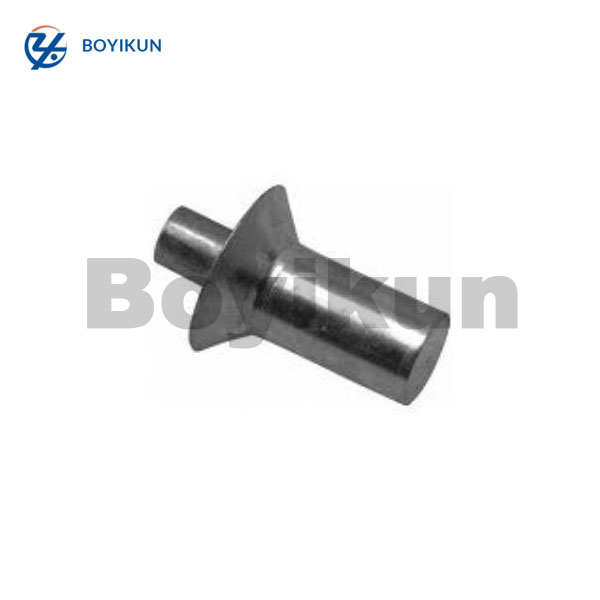

Stainless steel rivets are widely used in industrial assemblies where secure fastening, material durability, and resistance to corrosion are important. From automotive components and electronic equipment to construction hardware and furniture fittings, rivets provide a practical way to join materials without relying on threaded connections.
As manufacturers seek more consistent fastener dimensions and efficient production methods, cold forging remains an important process for producing metal fastening components in volume. Understanding how cold forging works, how stainless steel grades affect performance, and which specifications matter during sourcing can help buyers make more informed purchasing decisions.
Why Cold Forging Is Used for Stainless Steel Rivet Manufacturing
Cold forging forms metal under pressure without heating the workpiece to conventional hot-forging temperatures. In rivet manufacturing, the process can transform stainless steel wire or cut blanks into defined shapes through controlled deformation.
Depending on the part design and production setup, cold forging can support repeatable dimensions, efficient material utilization, and high-volume manufacturing. It is particularly useful for components with relatively consistent geometries, such as rivets and other small fastening parts.
The final result depends on more than the forming operation alone. Raw material condition, die design, lubrication, forming sequence, tooling wear, and subsequent finishing all influence dimensional accuracy and surface quality.
For buyers sourcing custom stainless steel rivets, discussing the component drawing and required production volume with the manufacturer helps determine whether cold forging is appropriate for the application.
Material Selection Influences Corrosion Resistance and Fastener Performance
Stainless steel is selected for many fastening applications because its chromium-containing alloy system can provide corrosion resistance under suitable environmental conditions. However, stainless steel grades differ in their resistance to specific corrosive environments, mechanical properties, and forming characteristics.
Consider the Operating Environment
Components used indoors under relatively mild conditions may have different material requirements from those exposed to moisture, outdoor weather, cleaning chemicals, or marine environments. Buyers should identify the expected exposure conditions before specifying a stainless steel grade.
Marine and coastal applications deserve particular attention because chloride exposure can increase the risk of localized corrosion in susceptible materials. A grade suitable for one environment should not automatically be assumed suitable for every marine or outdoor application.
Balance Formability and Mechanical Requirements
Cold forging subjects the material to substantial plastic deformation. The selected stainless steel must therefore be suitable for the required forming process while meeting the finished component's mechanical and dimensional requirements.
Buyers should confirm the material grade, relevant material documentation, and any required mechanical tests when specifying custom rivets. Where strength or structural performance is critical, material selection should be based on the actual joint design and service conditions rather than corrosion resistance alone.
Dimensional Consistency Is Essential for Reliable Rivet Assemblies
A rivet's dimensions directly affect how it fits into the prepared hole and how the joint forms during installation. Variations in shank diameter, length, head geometry, or concentricity can influence assembly quality and the consistency of the finished connection.
For this reason, manufacturers and buyers should establish dimensional requirements before production begins. Engineering drawings should identify critical dimensions, tolerances, head profiles, and any features that affect installation or joint performance.
In cold forging production, tooling condition and process stability are important factors in maintaining repeatability. Inspection plans may include dimensional checks, visual inspection, and other tests appropriate to the part's intended function.
For custom orders, an approved sample or first-article inspection can help both parties confirm that the proposed manufacturing process meets the agreed specifications before larger quantities are released.
Surface Condition and Finishing Should Match the Application
Surface condition affects not only the appearance of stainless steel rivets but also their suitability for subsequent assembly and use. Depending on the manufacturing process and customer requirements, parts may require cleaning, passivation, or other specified surface treatments.
Buyers should distinguish between a naturally finished stainless steel surface and an additional treatment applied after forming. They should also clarify requirements for oil removal, visible marks, discoloration, and packaging cleanliness.
Where corrosion resistance is important, surface treatment should be selected according to the stainless steel grade, manufacturing residues, intended environment, and applicable technical requirements. A blackened finish or other appearance treatment should not be assumed to improve corrosion resistance without supporting technical information.
Where Stainless Steel Cold-Forged Rivets Are Used
Automotive and Mechanical Equipment
Rivets can be used to join brackets, panels, supports, and other components in automotive assemblies and mechanical equipment. Buyers should evaluate joint loads, vibration, installation access, and the compatibility of the rivet material with the surrounding components.
Electronics and Electrical Equipment
Small fastening components are used in enclosures, internal structures, and equipment assemblies where repeatable dimensions can simplify production. For compact assemblies, accurate head dimensions and shank geometry can be especially important for clearance and installation.
Construction and Furniture Hardware
Stainless steel rivets may be used in sheet-metal assemblies, hardware fittings, furniture structures, and other products requiring permanent mechanical fastening. The appropriate design depends on the materials being joined, the thickness of the workpieces, and the loads expected during service.
Marine and Moisture-Exposed Applications
In moisture-exposed environments, stainless steel rivets can be considered where corrosion resistance is required. The specific stainless steel grade and joint design should be evaluated against the actual exposure conditions, including saltwater contact and the risk of galvanic corrosion when dissimilar metals are joined.
What Buyers Should Specify When Sourcing Custom Stainless Steel Rivets
A clear technical specification helps manufacturers assess production feasibility and prepare more accurate quotations. When sourcing stainless steel rivet cold forged parts, purchasing teams should consider the following information:
- Material grade: Specify the required stainless steel grade and any material certification requirements.
- Dimensions: Provide shank diameter, length, head dimensions, tolerances, and a technical drawing.
- Rivet design: Identify the required head style, end geometry, and any special forming features.
- Surface condition: Define whether the parts should be cleaned, passivated, blackened, or supplied with another specified finish.
- Application: Explain the materials being joined, installation method, and operating environment.
- Order quantity: Provide the initial order volume and estimated ongoing demand to support process and cost evaluation.
- Quality requirements: Identify critical dimensions, inspection criteria, testing needs, and documentation requirements.
- Packaging: Specify bulk packaging, part separation, labeling, and protection against contamination during transport.
If a standard drawing is unavailable, buyers can begin with a sample or preliminary design and clarify the critical requirements with the manufacturer. However, final dimensions and acceptance criteria should be documented before production approval.
Stainless Steel Rivet Cold Forged Parts from Boyikun
For industrial buyers sourcing custom stainless steel fastening components, manufacturing consistency, material selection, and clear technical communication are important considerations when choosing a long-term supplier.
Boyikun manufactures and supplies stainless steel rivet cold forged parts for customers serving a range of industrial markets. Its product information lists stainless steel as the material, a wire diameter range of 2–50 mm, and surface condition options described as oil-free or blackened. The actual dimensions and available finishes should be confirmed for the specific part design.
Buyers evaluating a custom rivet project can prepare their drawings, material requirements, surface specifications, and expected order quantities for review. Confirming these details at the quotation stage helps establish a clearer basis for production planning and quality acceptance.
To learn more about the available product options, visit Boyikun Stainless Steel Rivet Cold Forged Parts . For a project-specific quotation, you can also contact Boyikun directly with your component drawings and sourcing requirements.