Industry News

How Are Brass Precision Precision Turned Parts Manufactured?

2026-04-17 - Leave me a message

Summary: Brass precision turned parts play a vital role in modern manufacturing, offering exceptional durability, accuracy, and versatility for industries ranging from electronics to automotive. This article explores the manufacturing process, applications, advantages, and considerations when sourcing these components, with insights into how Boyikun ensures top-quality production for its clients.

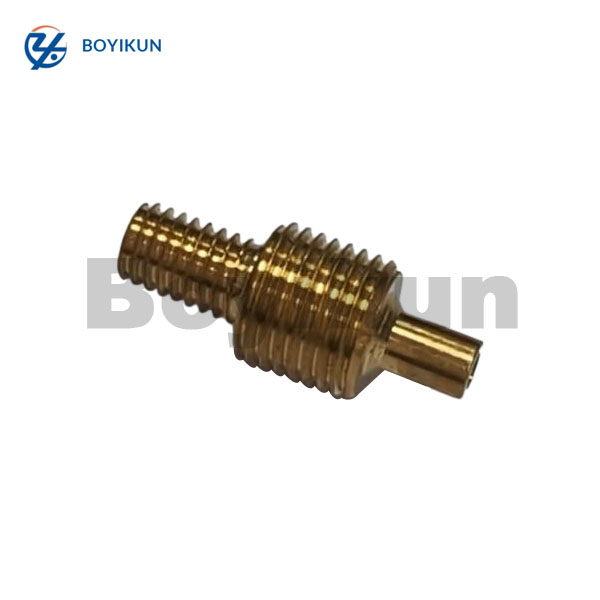
Brass Precision Bolt Turned Parts

Table of Contents


Introduction to Brass Precision Turned Parts

Brass precision turned parts are components created with meticulous attention to detail, often used where dimensional accuracy and mechanical reliability are critical. The process involves high-precision turning machines that shape brass stock into complex geometries, tailored to exact specifications.

Boyikun specializes in providing high-quality brass precision parts, ensuring consistency and performance for various industrial applications.


The Manufacturing Process

The production of brass precision turned parts involves several critical steps:

  • Material Selection: Choosing the appropriate brass alloy to meet strength, corrosion resistance, and machinability requirements.
  • Turning: Using CNC lathes or automatic turning machines to achieve precise dimensions and surface finishes.
  • Deburring and Polishing: Removing sharp edges and enhancing surface smoothness for functional and aesthetic purposes.
  • Inspection: Conducting rigorous dimensional checks using micrometers, calipers, and CMM (Coordinate Measuring Machines).

Process Flow Table:

Step Description Purpose
Material Selection Choose the right brass alloy Ensure mechanical properties and corrosion resistance
Turning Shape brass using precision lathes Achieve tight tolerances and surface finish
Deburring & Polishing Remove rough edges and polish surfaces Improve aesthetics and reduce wear
Inspection Dimensional and quality checks Ensure parts meet specifications

Key Material Properties of Brass

Brass, an alloy of copper and zinc, offers a combination of properties that make it ideal for precision turned parts:

  • High Machinability: Easy to cut and shape, reducing production time and cost.
  • Corrosion Resistance: Suitable for use in water systems, electronics, and marine environments.
  • Durability: Resists wear and tear in high-use applications.
  • Electrical Conductivity: Excellent for components in electrical and electronic devices.

Applications Across Industries

Brass precision turned parts are widely used across multiple industries:

  • Automotive: Fuel system components, connectors, and precision fittings.
  • Electronics: Terminal pins, connectors, and switches.
  • Plumbing: Valves, fittings, and couplings.
  • Medical Devices: Surgical instruments and precision equipment components.

Advantages of Using Brass Precision Parts

Choosing brass precision turned parts provides several benefits:

  • Consistent dimensional accuracy reduces assembly errors.
  • Enhanced corrosion resistance extends product lifespan.
  • Excellent machinability reduces manufacturing costs.
  • Versatility for both functional and aesthetic components.

Quality Considerations

When sourcing brass precision turned parts, consider the following quality factors:

  • Tolerance Levels: Ensure parts are manufactured within specified tolerances to avoid misfits.
  • Surface Finish: Smooth surfaces reduce friction and improve mechanical performance.
  • Material Certification: Verify that the brass alloy meets required industry standards.
  • Vendor Reputation: Work with experienced manufacturers like Boyikun for reliability and support.

Frequently Asked Questions (FAQ)

  • Q: What tolerance levels can Boyikun achieve?
    A: Boyikun can achieve tolerances as tight as ±0.01mm, depending on the component design.
  • Q: Can brass precision parts be plated or coated?
    A: Yes, additional surface treatments such as nickel or chrome plating are available for specific applications.
  • Q: How does brass compare to stainless steel in precision parts?
    A: Brass offers superior machinability and corrosion resistance in certain environments, while stainless steel provides higher tensile strength.
  • Q: Does Boyikun provide custom manufacturing services?
    A: Absolutely. Boyikun specializes in custom precision turned parts to meet exact client specifications.

For businesses seeking reliable, high-quality brass precision turned parts, Boyikun delivers exceptional solutions tailored to your requirements. Explore more about our products at Brass Precision Turned Parts and contact us today to discuss your project needs!

Send Inquiry


X
We use cookies to offer you a better browsing experience, analyze site traffic and personalize content. By using this site, you agree to our use of cookies. Privacy Policy
Reject Accept