
If you’re sourcing precision metal components, you’ve likely debated between hot and cold forging. Many manufacturers assume hot forging is the default choice for strength and durability. But what if we told you there’s a method that delivers superior precision, material savings, and long-term reliability—all while reducing costs? At Boyikun, we specialize in advanced cold forging technology, and we often hear from clients who are surprised by the efficiency and quality of Cold Forged Parts. Let’s explore why cold forging is increasingly becoming the go-to solution for cost-conscious industries.
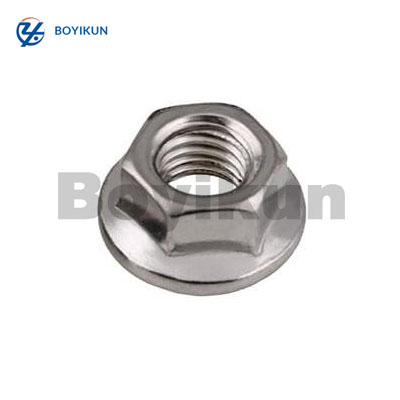
One of the most common questions we encounter is: How can a process performed at room temperature compete with hot forging’s high-heat methods? The answer lies in efficiency. Cold Forged Parts are formed without heating the material, which immediately eliminates energy-intensive heating furnaces and reduces operational costs. This method also minimizes material waste because the process allows for near-net-shape production. At Boyikun, our engineers have refined cold forging techniques to ensure every gram of material is utilized effectively, passing those savings directly to our clients.
Are you struggling with component consistency or post-production machining costs? Cold forging addresses these pain points directly. Since the metal is worked at lower temperatures, it undergoes work hardening, which naturally improves its strength and surface finish. This means Cold Forged Parts often require less secondary processing. For example, our clients report fewer steps for finishing, which translates into faster turnaround times. When you choose Boyikun, you’re not just buying a part—you’re investing in a streamlined production cycle that maintains tight tolerances and reduces overall labor.
Absolutely. Our clients range from automotive to electronics, and each sector has unique demands. Below is a comparison of key parameters for typical Cold Forged Parts we produce versus conventional hot forged components:
| Parameter | Boyikun Cold Forged Parts | Typical Hot Forged Parts |
|---|---|---|
| Material Utilization | 95-98% | 80-85% |
| Surface Roughness (Ra) | 0.8-1.6 µm | 3.2-12.5 µm |
| Dimensional Tolerance | ±0.05 mm | ±0.5 mm |
| Secondary Machining | Minimal to None | Often Required |
| Production Cycle Time | 20-30% Faster | Standard |
This table highlights why Cold Forged Parts are ideal for applications where precision and efficiency are non-negotiable. At Boyikun, we tailor our cold forging processes to meet specific client requirements, ensuring every component exceeds expectations.
Beyond immediate cost savings, cold forging offers sustainability advantages. The reduced energy consumption and material waste contribute to a smaller environmental footprint—a growing concern for many businesses. Additionally, Cold Forged Parts exhibit excellent fatigue resistance and longevity, meaning fewer failures and lower lifetime costs. We’ve seen clients reduce their total cost of ownership by up to 25% after switching to our cold forged solutions. It’s why Boyikun remains committed to advancing this technology, helping partners achieve both economic and operational goals.
If you’re tired of compromising between quality and cost, it’s time to explore cold forging. At Boyikun, we combine decades of expertise with state-of-the-art equipment to deliver Cold Forged Parts that perform reliably under the toughest conditions. Whether you need custom components or high-volume production, our team is here to provide solutions that fit your exact needs. Contact us today to discuss your project—let’s transform your manufacturing process together. We look forward to your inquiry and partnering on your next success story.


